
I Analyzed 139 Viral Substack Posts
Here’s the Pattern

You have subscribers. But your likes and engagement? -Crickets.
Here’s the truth: it’s not your writing. It’s what you’re choosing to write about.
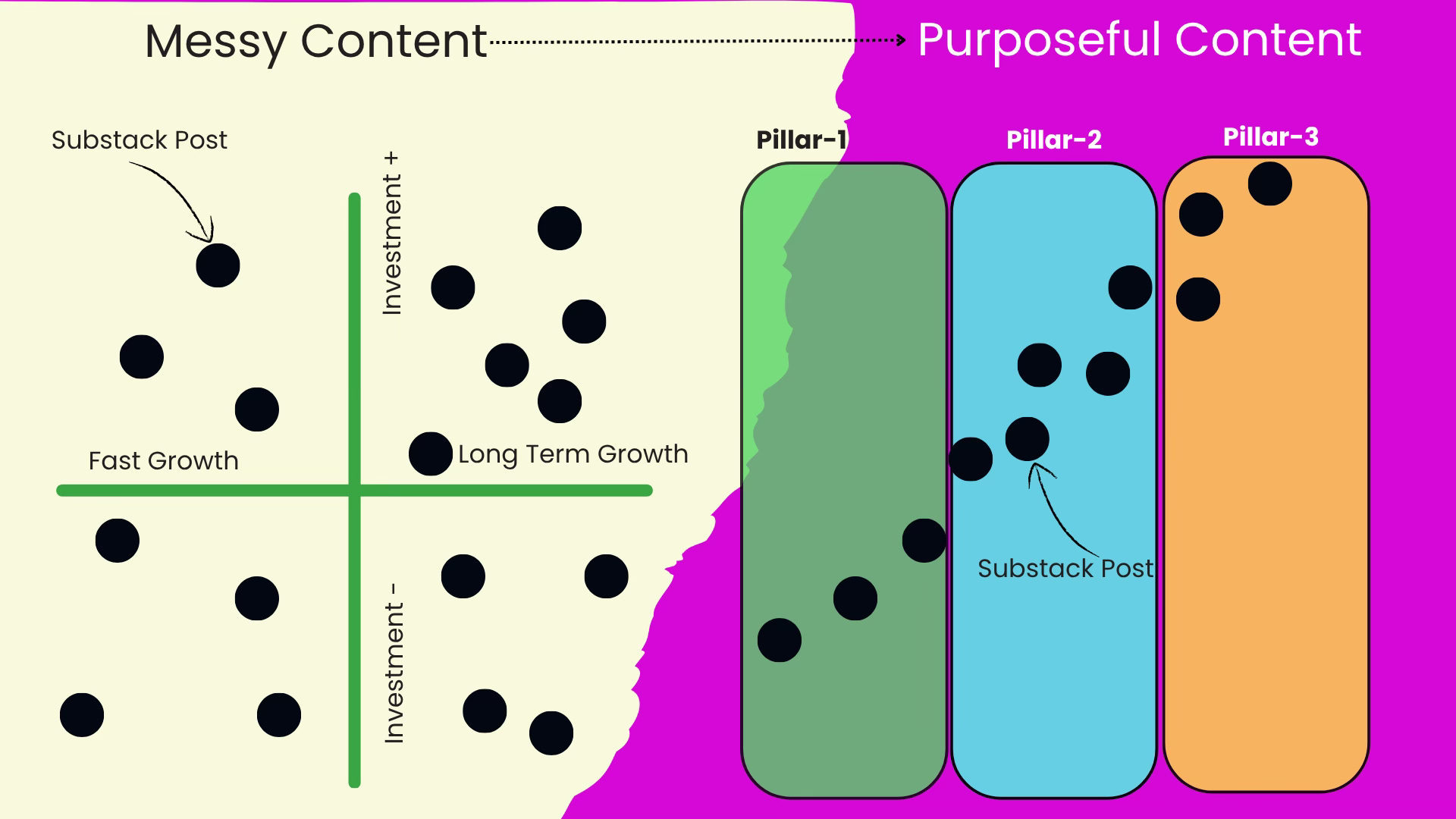
The 10-Second Reality
People don’t read on Substack- they skim. They scan your title, read the first 2-3 lines, glance at a few bullet points, and decide within 10 seconds if they’ll continue.
Those 10 seconds are everything.
This is why your read count might be high but engagement stays low. People open, skim, and move on. They never connect enough to like or comment.
By the end of this newsletter, you’ll know exactly what to write about to grow your audience as a solopreneur.
Define Your Content Pillars
After you’ve nailed your mission and customer persona, you need three clear pillars for your content.
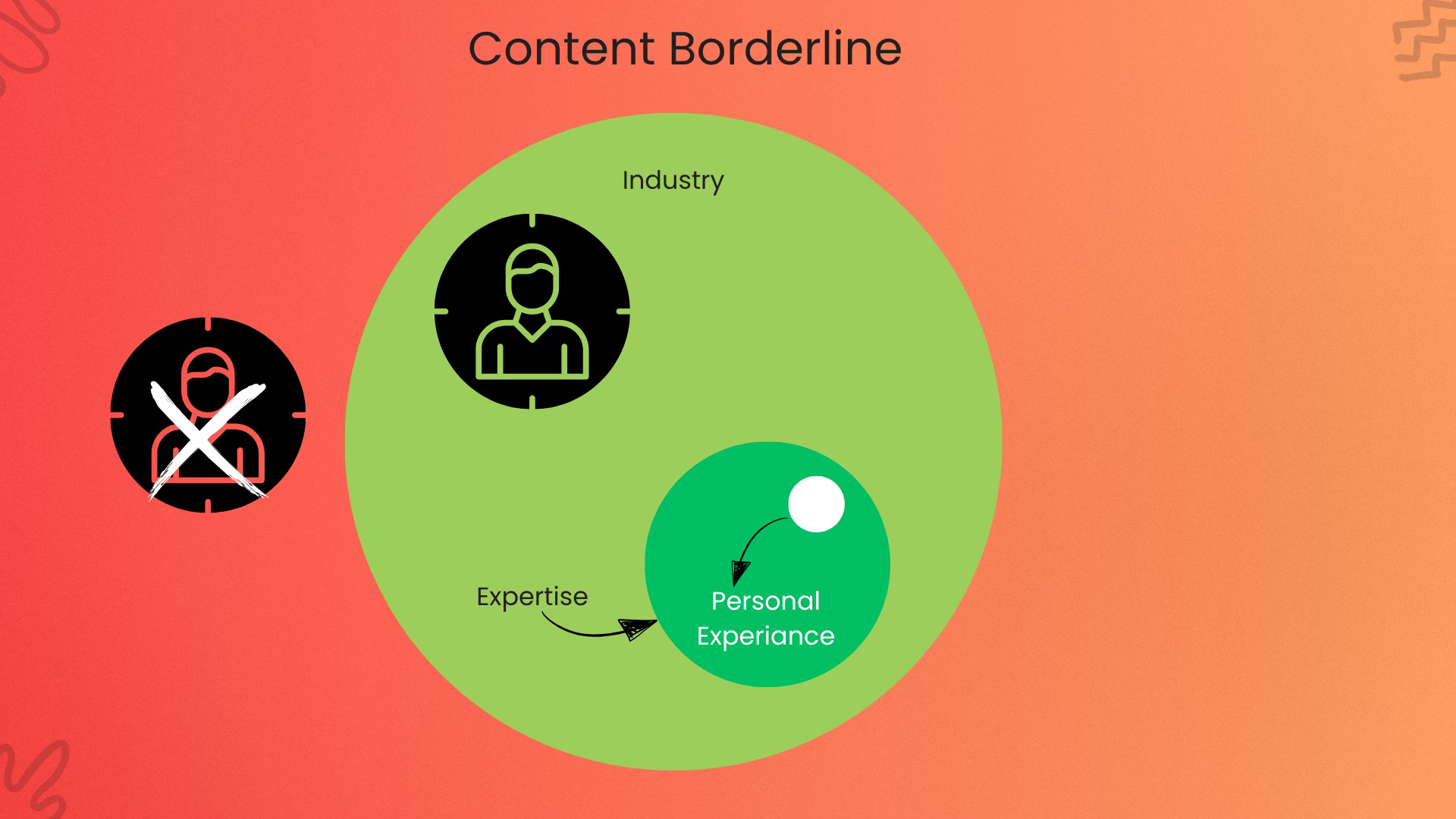
These pillars keep you focused and help readers know what to expect from you. Think of them as concentric circles: Industry (broadest reach), Expertise (mid-level), and Personal Stories (deepest connection).
Pillar 1: Industry Insights
Why it matters: This is your top-of-funnel content. It attracts the right people by addressing what’s happening in your space right now.
When you write about industry trends, problems, and progress, you’re fishing in the right pond. People searching for solutions in your industry will find you. This content positions you as someone who understands the landscape-not just someone selling something.
If you are looking for a detailed blueprint on writing a newsletter with researched newsletter formats, I have a 6-step framework with AI prompts to make your newsletter go viral.
This is what I used to grow from 0 to 1.1K+ Subscribers in less than a year - [Access Here]
How to use this pillar:
Write about the latest updates, shifting trends, and common problems in your industry. For me in solopreneurship, I write about people quitting corporate jobs, the creator economy boom, and building communities on Substack.
Ask yourself:
What’s changing in my industry right now?
What problems are people complaining about?
What new opportunities are emerging?
What myths need debunking?
Content examples:
“Why 10,000 professionals quit their jobs last month”
“The hidden cost of staying corporate in 2025”
“What the new creator economy data reveals”
This content casts the widest net. Some readers will stay surface-level, but the right ones will want to go deeper- which leads them to your expertise.
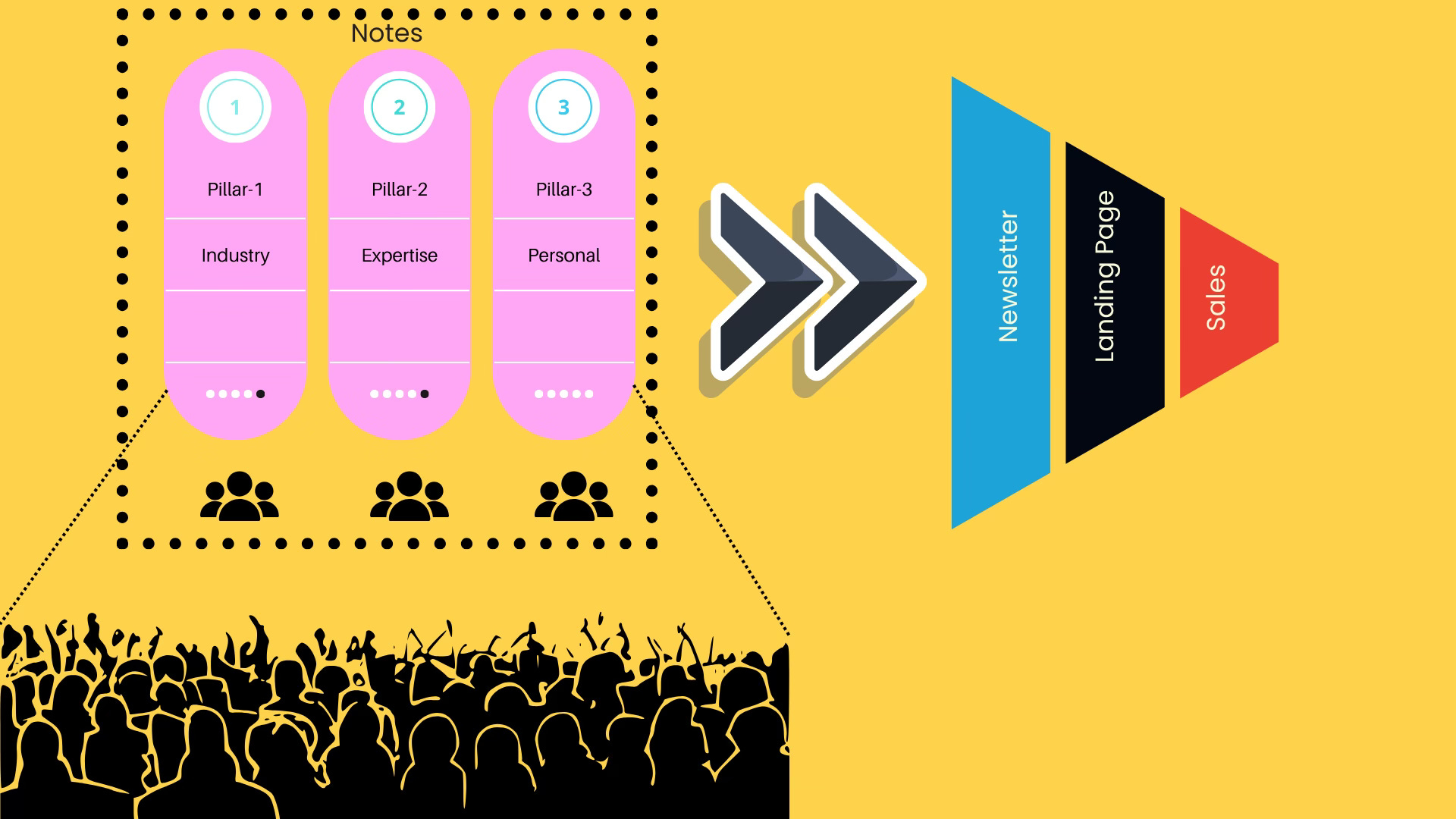
Pillar 2: Your Expertise
Why it matters: Industry insights attract attention. But expertise builds authority. This is where you differentiate yourself from every other creator in your space.
Your expertise is your competitive moat. It’s what makes people think, “I can’t get this perspective anywhere else.” This content moves readers from curious observers to engaged followers.
How to use this pillar:
Mine your unique advantages. You have experiences, perspectives, and skills that nobody else has in quite the same combination.
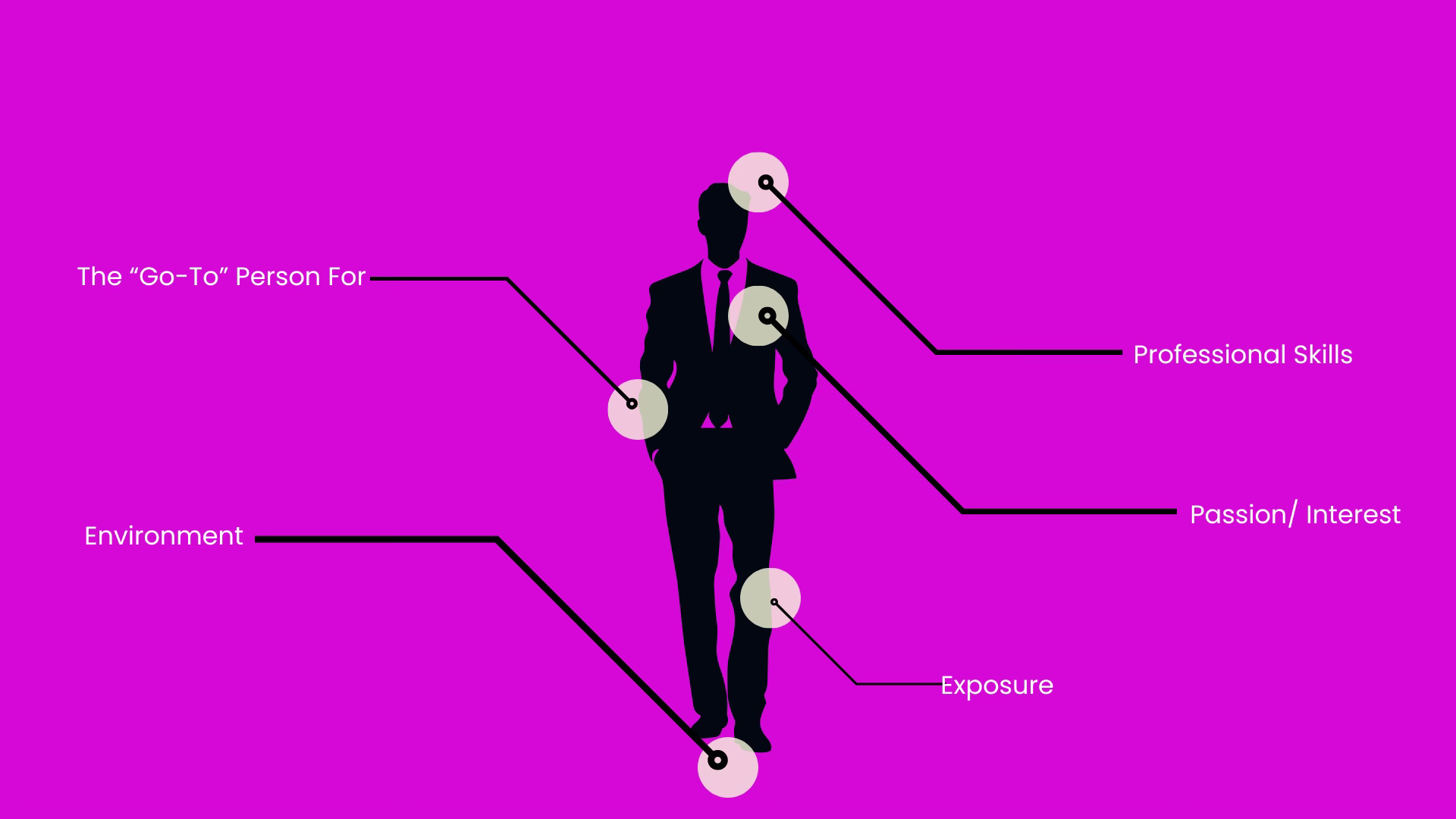
Ask yourself these four questions:
What experience do I have that others don’t? Maybe you worked in a specific role, built something from scratch, or failed in an instructive way.
What geographic or professional advantage do I have? Are you in a unique market? Do you have access to specific communities or insider knowledge?
What personal skills (from hobbies or interests) apply here? Your side interests often reveal unique angles. A solopreneur with a psychology background sees business differently than one with an engineering background.
What do people repeatedly come to me for? Pay attention to what questions people ask you again and again. That’s your signal.
Content examples:
“How I used my design background to 3x my conversion rate”
“What 5 years in corporate taught me about solopreneur pricing”
“The psychology principle that changed how I write newsletters”
This is where you stop being one voice among many and become the voice people trust in your specific intersection of expertise.
Pillar 3: Personal Experiments
Why it matters: Industry insights show you’re informed. Expertise shows you’re credible. But personal stories show you’re human.
People don’t just want information—they want transformation. And transformation comes from seeing someone like them succeed (or fail) and learn. Your experiments prove you’re in the arena, not just commentating from the sidelines.
Before sharing your Personal Experiment, it is important to define your Mission and Anti-Mission.
I have a free Master Prompt for you to define your Anti MISSION.
This content creates the deepest emotional connection and turns followers into fans.
How to use this pillar:
Share the messy middle. Document what you’re actually doing, not just what you think people should do. Be specific about your experiments, honest about failures, and clear about what you learned.
Three types of personal content:
The experiments you’re running: Share what you’re testing right now. “I’m trying a new content schedule for 30 days—here’s why.” Real-time documentation builds anticipation and engagement.
Your failures and lessons: This is gold. “I lost 200 subscribers by making this mistake-here’s what happened.” People remember failures more than successes because they learn from them.
Your point of view based on lived experience: Take a stance informed by what you’ve actually done. “After building three newsletters, here’s what I believe about growth tactics.” This is opinion backed by action.
Content examples:
“Week 3 of my content experiment: what’s working and what’s not”
“I wasted $500 on this growth tactic—save yourself the pain”
“Why I stopped using the advice every guru gives (and what I do instead)”
The key is specificity. Don’t say “I tried something new.”
Say “I posted at 6am instead of 9am for 14 days and tracked open rates daily—here’s what happened.”
How to Make People Care: The 3-Step Funnel
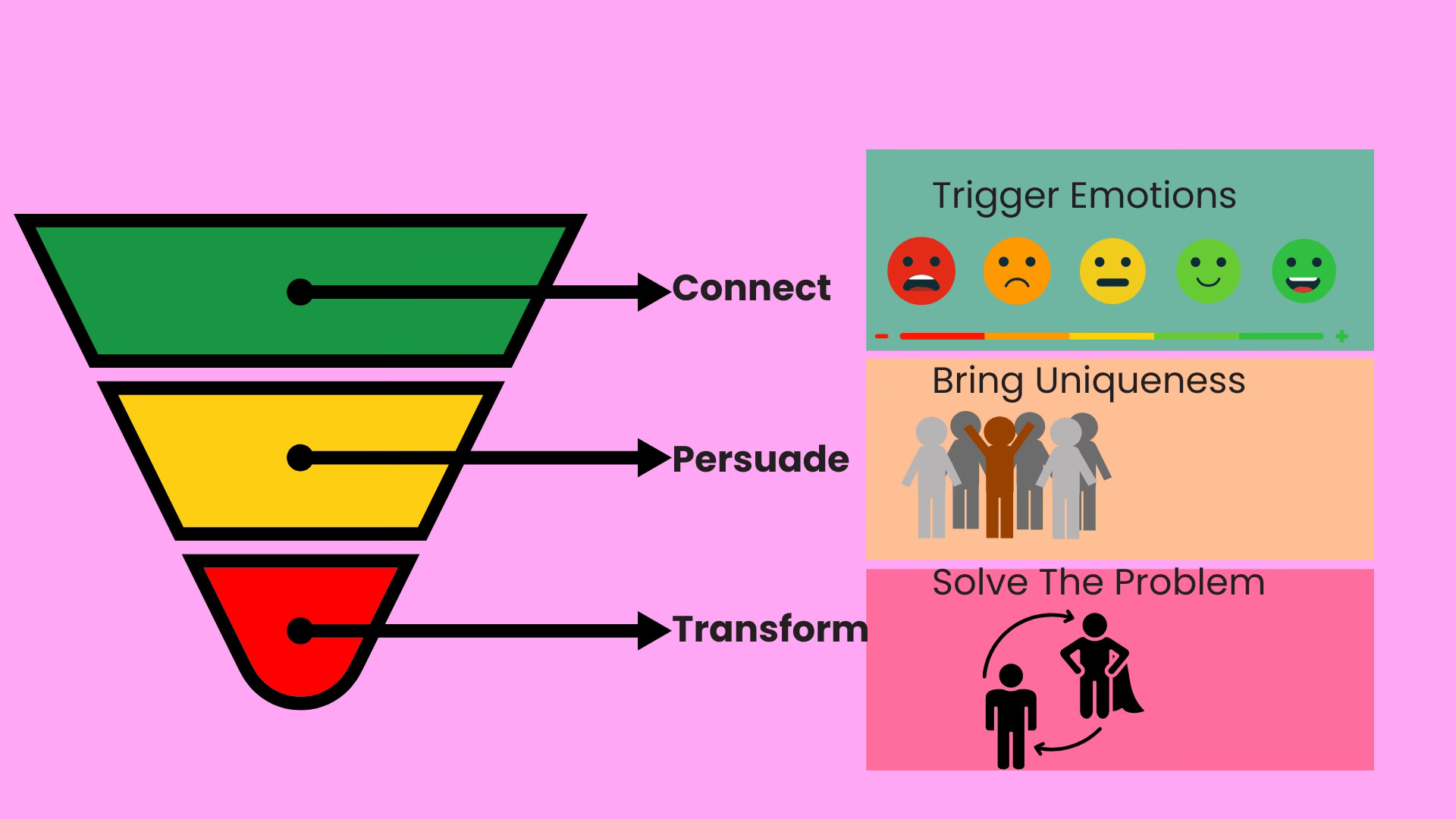
It’s not just what you write- it’s how you present it. Here’s the formula:
Connect → Persuade → Transform.
Step 1: Connect
Start with the problem. Talk about what your reader is experiencing right now. Be authentic. Make them think, “Yes, this is exactly what I’m dealing with.”
How to do it:
Open with a specific pain point, not a general statement. Instead of “Growing on Substack is hard,” try “You hit publish, wait for the notifications, and see... nothing. No likes. No comments. Just silence.”
Use sensory details and emotions. Describe what they’re seeing, feeling, or thinking when they experience this problem.
Make them feel like you’ve been inside their head. If they don’t feel seen in the first few lines, they won’t keep reading.
I actually created a Prompt library specifically for Substack Creators with plug-and-play Prompts for Idea generation and research. Here is the link to my 48 Prompts Library for Substack Newsletter Creators - [ Access Here ]
Step 2: Persuade
Bring your uniqueness. Either share content no one else is talking about, or share common content in a way no one else is doing.
How to do it:
Share an unexpected insight or contrarian take. For example: “Everyone says post consistently. But I grew faster by posting less and being more strategic.”
Introduce a framework or mental model no one else uses. This could be from your expertise, a different industry, or your personal experience.
Make readers think, “I’ve never heard it explained this way before.” This is where your expertise and perspective shine—don’t blend in, stand out.
Step 3: Transform
Give them the juice. Hand over the blueprint, the how-to guide, the case study. Show them exactly how to solve the problem you opened with.
How to do it:
Break down your solution into actionable steps or principles. Instead of “Focus on quality,” say “I publish twice a week: Tuesdays for industry insights, Fridays for personal experiments.”
Use specific numbers, timelines, or results. “This structure grew my engagement by 47% in 60 days” is better than “This works really well.”
Give them something they can implement today. The payoff is connecting them to the problem, persuading them with your unique angle, then transforming them with immediate action steps.
Bottom Line
When you combine these three content pillars with the engagement funnel, you stop guessing what to write. You create content that attracts, engages, and converts.
That’s how you grow your audience as a solopreneur.
See you in the next edition.
Your Biggest Fan,
Mike
This was the very best article I've read in a couple months! It gave me so many great ideas. Very enlightening! Thank you. 💖🦋
I appreciate the work put into this post. However, I think the lack of a good recommendation algorithm is what is debilitating Substack. I have been A/B testing it and Medium. *same* 15 articles over 6 weeks. Substack > 13 wonderful followers, 300 reads. Medium > 66 subscribers and 41 followers, 3000 reads and lots of WONDERFUL comments and messages. I think Substack is better for people already with large followings elsewhere - to drive them here. But within the platform all I see is articles about account growth. 🤔🤷♂️