

I Analyzed 94,000 Substack Posts. Here's What Top Creators Do Differently
5 Focus Areas that Transform Your Substack

Last month, I went deep into a study that changed how I look at my newsletters.
Orel , the founder of WriteStack, analyzed 94,391 public Substack posts from April 2026. Real posts. Real reactions. No survey answers, no opinions. Just raw data on what people actually clicked, read, and liked.
I went through every finding, compared it with what I see top creators doing, and matched it against my own experience.
What I found was not complex. That was the surprising part. The patterns were simple, obvious even. And 95% of creators are still ignoring them.
Here’s what the data actually says.
What We’re Covering Today
📌 1. Why your title is losing you readers before they even open your post
📏 2. The content length that wins (it’s not what you think)
🖼️ 3. The image mistake that kills 81% of your potential reach
✍️ 4. What your subtitle should actually be doing
📢 5. How Notes and distribution changed the growth game entirely
1. Your Title Is Losing You Before You Even Start
I used to think short and punchy was the move.
“Build Your Audience.” “Grow Faster.” Five words, clean, direct.
Turns out I was wrong.
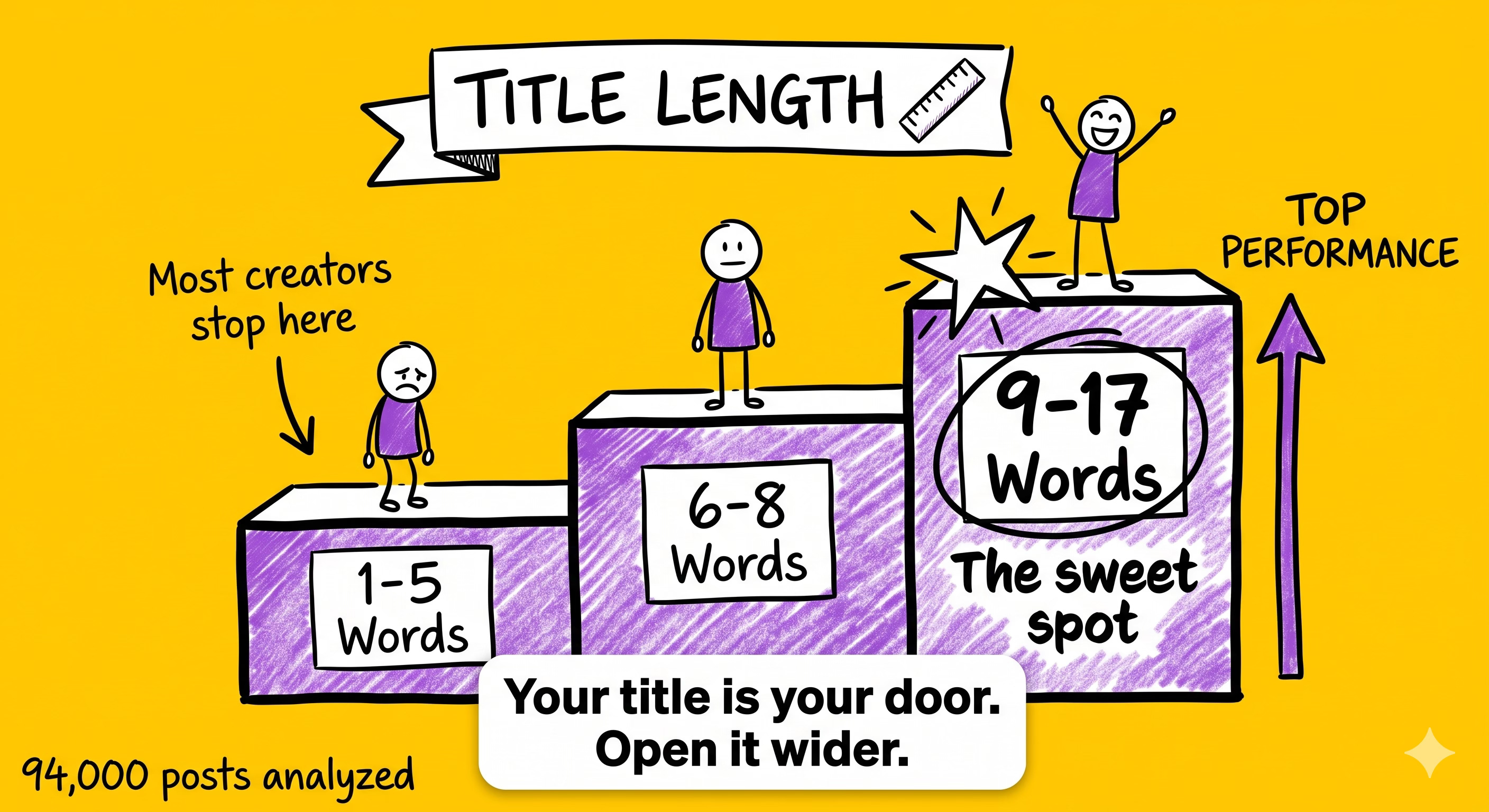
The data from 94,000 posts shows the sweet spot for title length is 9 to 17 words. Most writers default to 1-5 words. That’s the bulk of posts in the dataset. And those posts consistently underperform the longer ones.
The title is not just a label. It is your entire first impression inside someone’s inbox.
1.1 The First-Person Advantage
First-person titles get the highest engagement across the entire dataset. Posts like “I Tried This for 30 Days and Here’s What Happened” or “I Made Every Mistake. Here’s What I Learned.”
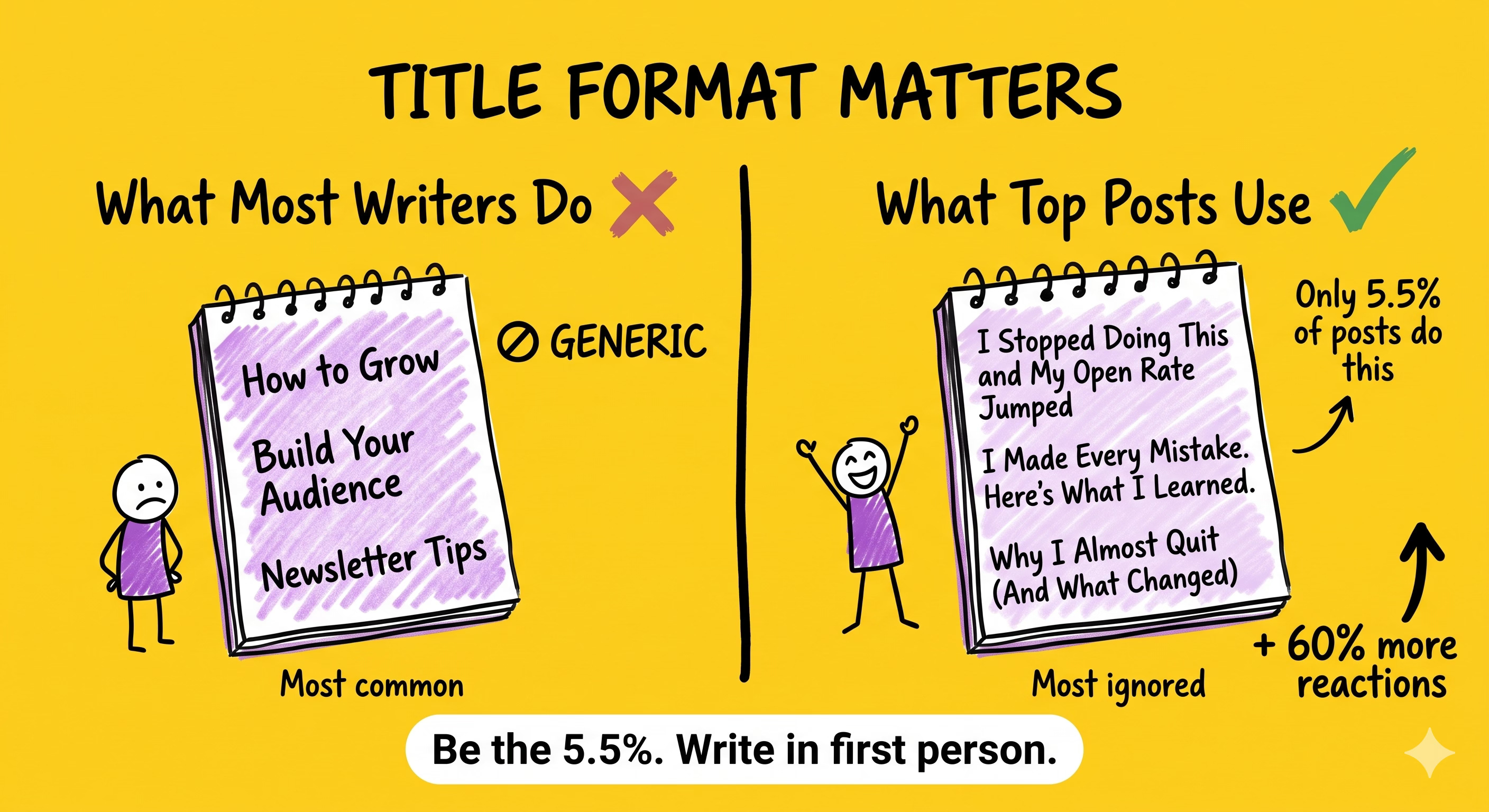
Here’s the thing: only 5.5% of posts use them.
That is a wide-open gap most writers are leaving empty. I know because I was doing the same.
When I switched a few titles on my own posts to first-person framing, the difference in open rate was immediate. “I Stopped Writing Long Intros. My Open Rate Went Up” beat “How to Write Better Newsletter Intros” by a margin I couldn’t ignore.
Readers do not connect with strategies. They connect with people.
1.2 Negative Framing Works (Even When It Feels Wrong)
Posts with negative framing earn a 60% reaction premium over neutral titles. Words like “mistake,” “wrong,” “stop,” “failed,” “don’t.”
Only 5% of posts use this approach.
Most creators avoid it because it feels pessimistic. But readers click on it because it speaks to something they are already afraid of. Fear of wasting time. Fear of doing it wrong. Fear of falling behind.
“What I Stopped Doing on Substack That Was Hurting My Growth” will beat “How to Grow Your Substack” almost every time. Not because negativity is a trick. Because it is more honest than another generic how-to.
1.3 Title Format Comparison
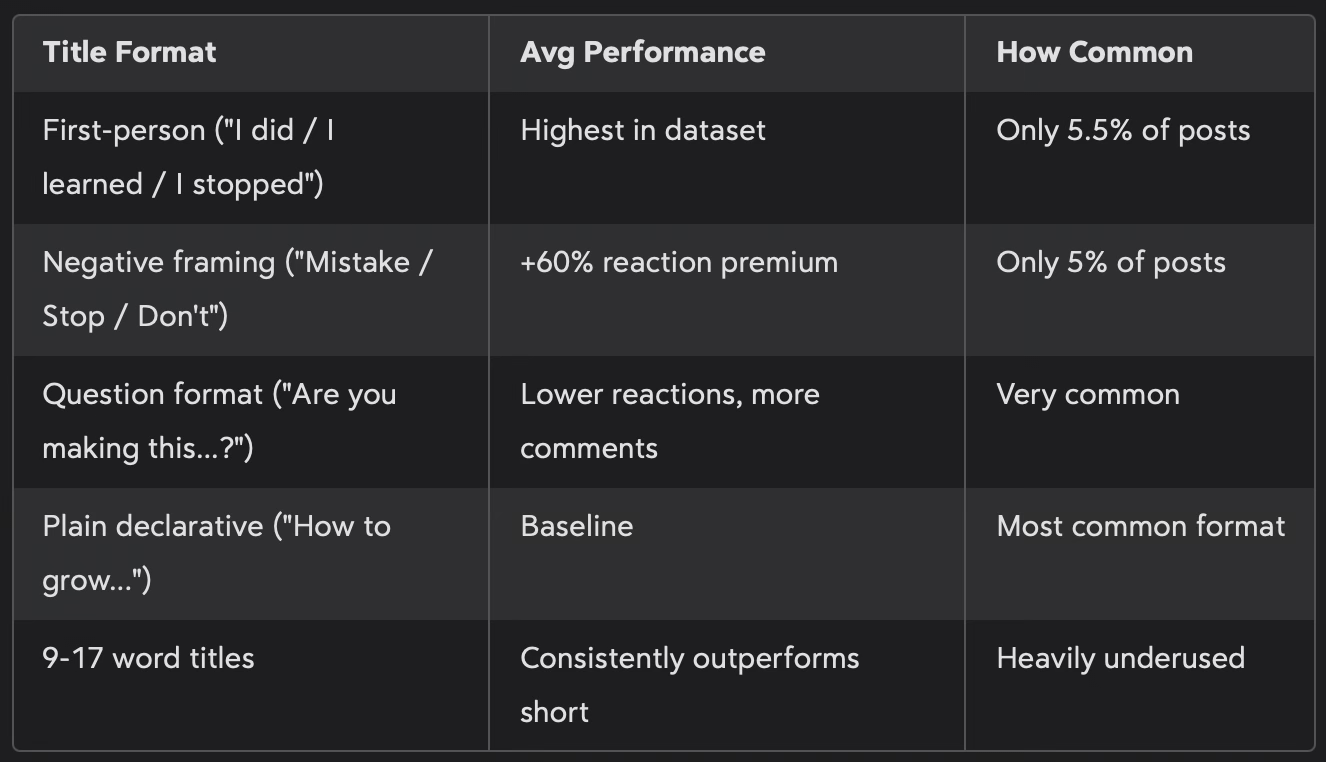
The lowest-performing creators are using the most common formats. That pattern repeats throughout the data.
2. No Cover Image Means You Are Invisible
This one is non-negotiable. The data is blunt about it.
Posts without a cover image get an 81% reaction penalty.
Not 10%. Not 20%. Eighty-one percent.
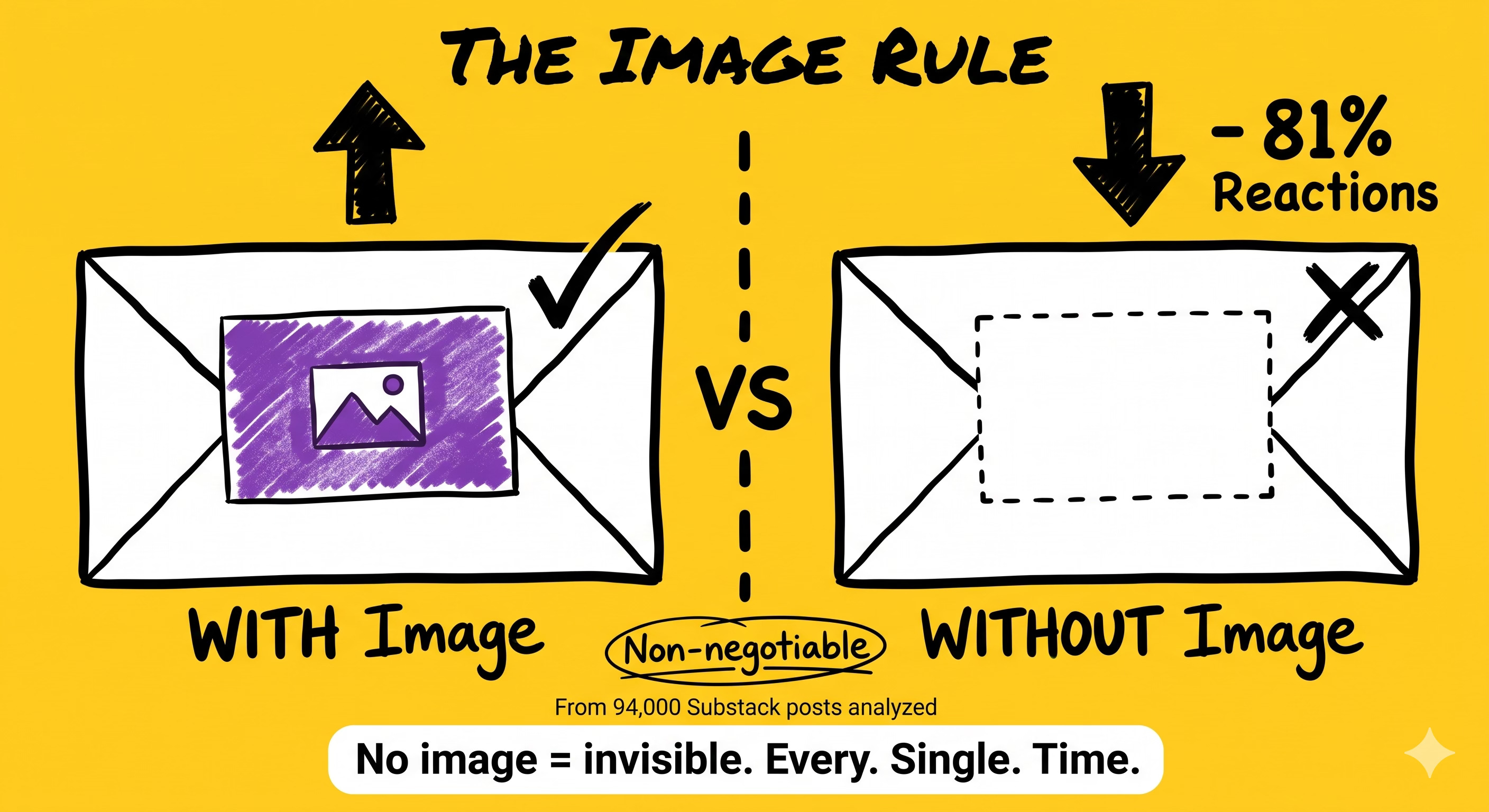
I know creators who skip images because “it takes too long” or “it doesn’t feel necessary.” I skipped images myself in the early days of Purplemind. I thought the writing would carry the post. The data disagrees.
The same pattern shows up in Notes. Orel analyzed 12.4 million Substack Notes separately and found that Notes with images get 63% more engagement than text-only Notes. Out of 5.46 million Notes in that study, only 25% had images. Those 25% consistently outperformed the other 75%.

Images are not decoration. They are your first impression in a crowded feed. People decide in half a second whether to stop scrolling. A blank post tells them nothing.
3. Content Length: Pick a Lane and Own It
There is not one correct answer here. That’s actually the point.
3.1 The Three Length Zones
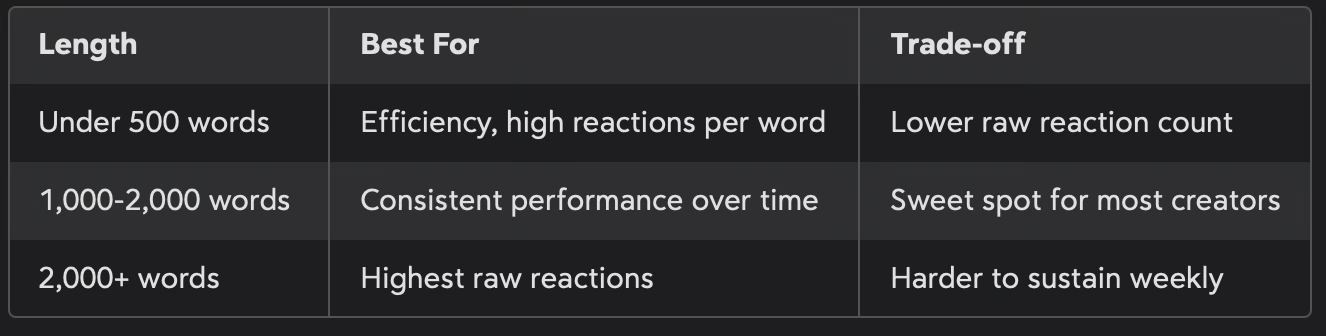
Long-form (2,000+ words) wins on total reactions. Readers reward depth and effort.
Short-form (under 500 words) wins on efficiency. Strong engagement relative to the investment.
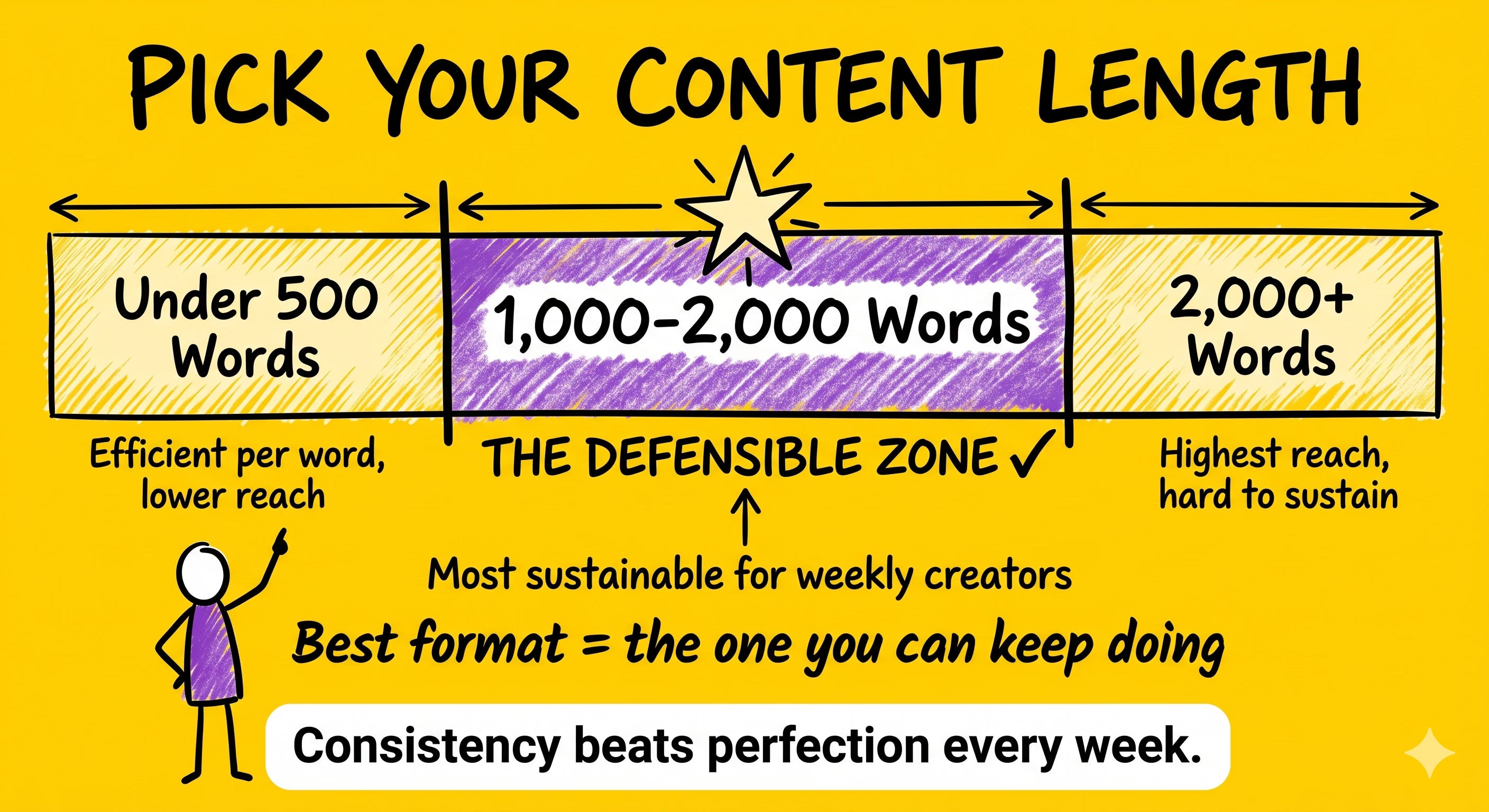
The 1,000-2,000 word range is what I think of as the defensible zone. You can hit it consistently without burning out. The returns are solid and sustainable.
For most beginner creators, the mistake is either going too short without realizing you lose raw impact, or going too long and burning out after five weeks.
The best format is the one you can sustain. A 1,200-word post every week beats a 3,000-word post once a month. Consistency compounds in a way that volume never does.
3.2 The “Thread” Pattern Nobody Talks About
One thing in the data surprised me. Some posts get 500 to 600+ comments with under 70 reactions.
These are Thread posts. First-person challenge or confession formats that start conversations instead of chasing claps.
“I Published Every Day for 60 Days. Here’s My Honest Result” is not trying to go viral. It is trying to start a real conversation. And the comments compound into more reach, more discovery, more trust.
If you want community, not just claps, this is the format worth studying.
4. Your Subtitle Is Working Against You
Most creators use their subtitle as a repeat of their title.
“How to Grow on Substack” followed by a subtitle that says “A guide to growing your newsletter.”
That’s doing nothing. Worse than nothing. It wastes a second chance to hook the reader.
The data shows subtitles of 1 to 5 words perform the same as having no subtitle at all. The sweet spot is 6 to 10 words that add new information, not restate the title.
Think of the subtitle as your second hook. Not your title’s shadow.
“I Analyzed 94,000 Posts” works as a title. The subtitle “Here’s the one pattern every top creator shares” adds intrigue. “A data-driven look at newsletter growth” does not.
One question to check your subtitle: does it give me something my title didn’t? If not, rewrite it.
5. The Distribution Problem Nobody Wants to Talk About
Better posts are not enough. I say this from experience.
The data study captures engagement. It doesn’t capture the full picture of how top creators are actually growing. That part becomes clear when you look at who is winning on Substack right now.
Sinem Günel at Write Build Scale has 50,000+ subscribers and close to 2,000 paid members. She publicly shares that over 8,000 of those subscribers came from recommendations alone. Not from viral posts. Not from perfect titles.
From other creators sending their audience her way.
5.1 Notes Is Now the Biggest Early-Stage Growth Channel
For most writers starting out on Substack today, Notes is driving 30 to 50% of new subscribers. Some early-stage creators report 70 to 80% of their growth from Notes.
And here’s the timing data from 12.4 million Notes that Orel analyzed:
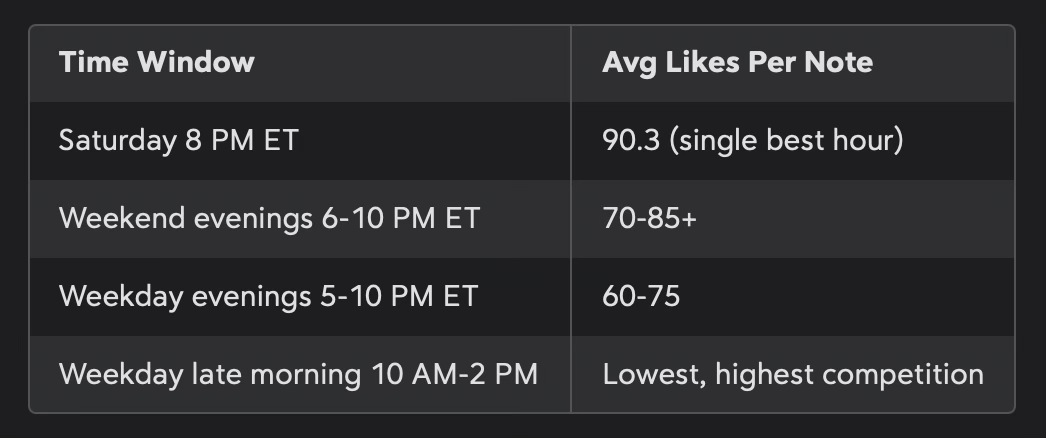
Most creators post when it is convenient for them. The data says evenings win every single time because fewer creators are posting and reader attention is higher.
5.2 What Notes Content Actually Converts
Not every Note drives subscriptions. The formats that pull new readers:
Contrarian takes (”Everyone says X. Here’s why I disagree...”)
Vulnerable confessions (”I made this mistake for six months...”)
Behind-the-scenes personal results (”My open rate this week was 41%. Here’s what changed...”)
Genuine conversation starters with real questions
Generic promotional Notes like “New post is live, go check it out!” are the biggest waste of a Notes strategy I see from beginners.
5.3 The Recommendation Lever Most People Ignore
Substack reported 32 million new subscribers came from within the app over a recent three-month period. The internal recommendation network is driving real growth. If you are not actively building relationships with other writers in your niche for cross-recommendations, you are skipping the fastest growth lever on the platform.
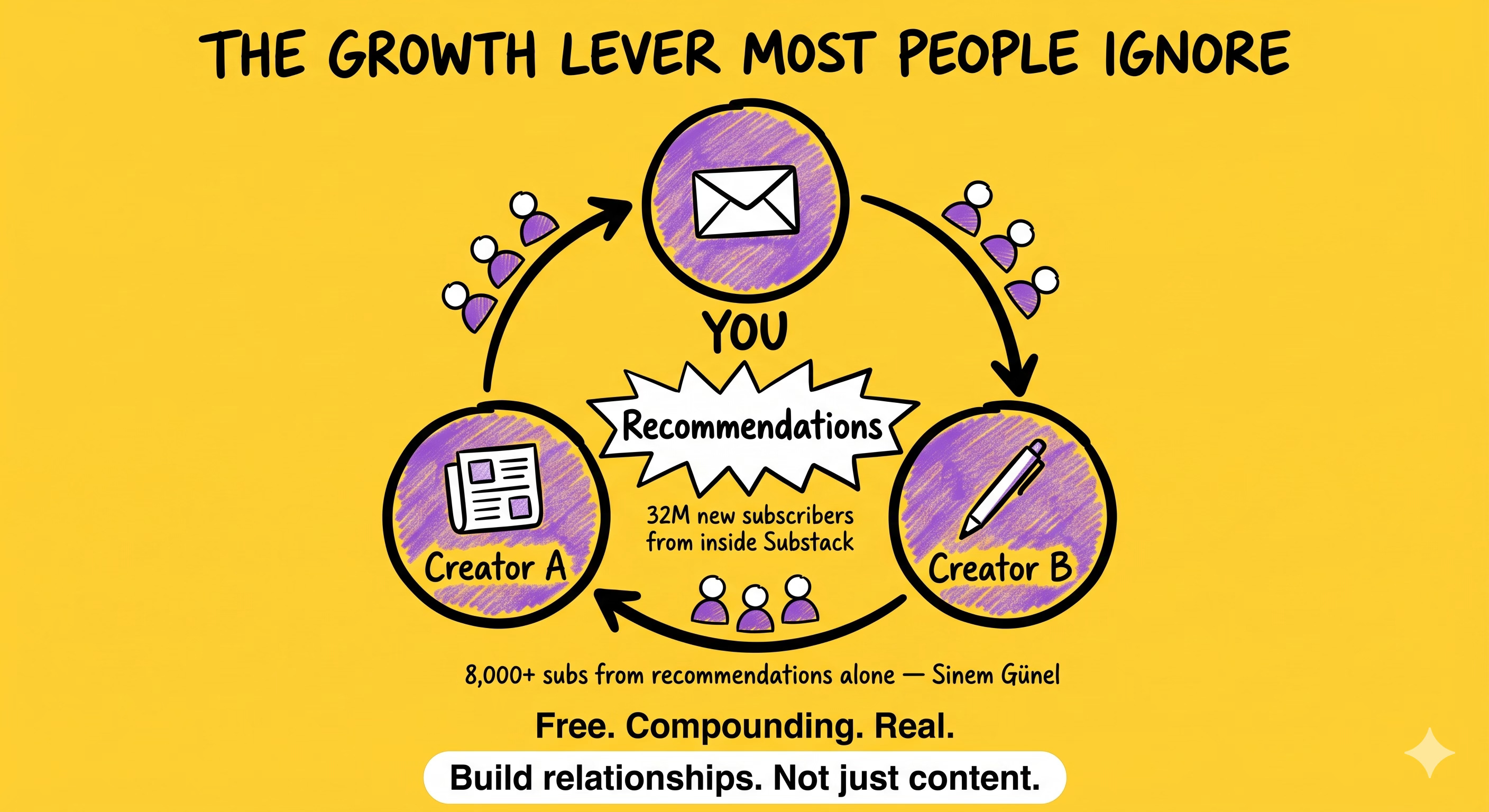
Sinem’s team turned this into a system. Most creators treat it like an afterthought, something to do “when they’re bigger.”
That thinking keeps them small.
The One Thing to Do This Week
I want to give you one action, not ten.
Go look at your last five post titles. Count the words. Check if any are written in the first person. Check if any use negative framing or a challenge/confession angle.
If none of them hit 9 to 17 words with a personal angle, that is your first fix. Before the content length strategy, before the Notes timing, before everything else.
Your title is the door. If nobody opens it, the room does not matter.
Hey Mike - this is a super valuable analysis - thanks! It correlates with what I am discovering as well.