

Your Newsletter will Never Grow Until You Understand Readers Journey Map
I learned Readers journey map the hard way to write the content based on readers stage

I thought a funnel was a landing page, a welcome email, and maybe a paid offer.
That was wrong.
A funnel is a journey. Most newsletters skip the most important part: meeting readers where they actually are.
Not where you wish they were. Where they actually are right now.
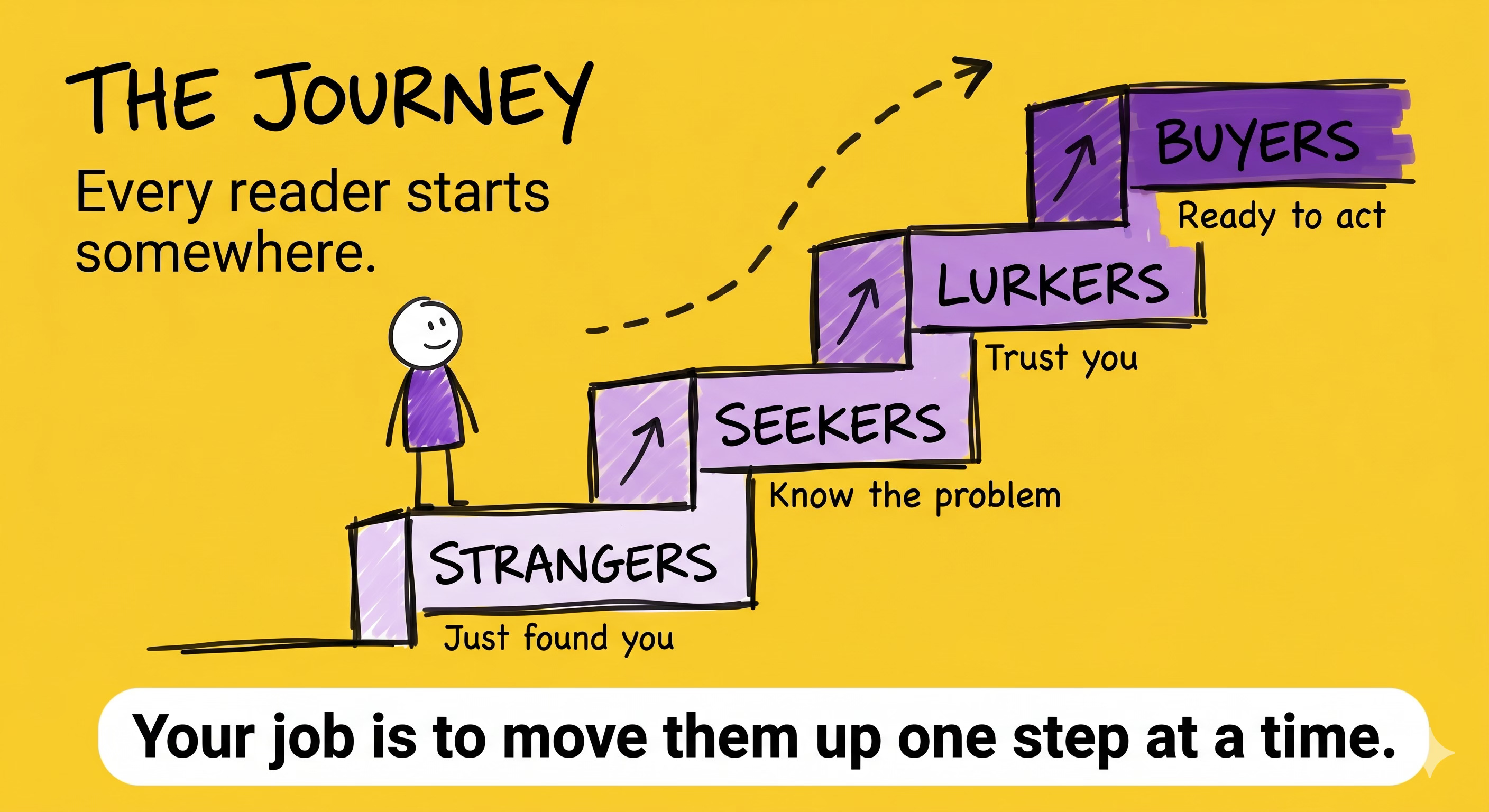
Some people find you and have no idea what they are looking for. Others know their problem but haven’t decided they trust you yet. And a small group is ready to buy but nobody told them what to buy.
One piece of content cannot serve all three groups. That is the core problem.
I spent months publishing consistently and wondering why my open rates were good but conversions were flat. The writing wasn’t the issue. The mismatch was.
I started solving this with a framework I call the Reader Journey Matrix. And I use one tool to build the whole thing: Claude.
No CRM. No expensive automation stack. Just Claude and a clear map of where each reader sits.
Here’s what we’re covering today:
📍 1. Why most funnels don’t work - and it’s not your writing
🔲 2. The Reader Journey Matrix - the four types of people in your audience right now
✍️ 3. What to write for each quadrant - with real creator examples
🔀 4. The trigger content that moves people forward - the bridge between quadrants
🎯 5. Your one action to start today
Why Most Funnels Don’t Work
1.1 You’re Writing for One Person Who Doesn’t Exist
Most newsletter creators write as if every reader is the same person.
They imagine a fictional “ideal reader” and write everything for that one person.
The problem?
Your actual audience is four very different types of people. Each type needs different content to take the next step.
Writing one type of content for all four groups is like giving everyone at a restaurant the same dish. Some people are vegetarian. Some are allergic to gluten. One person just wanted coffee.
Nobody gets what they actually need.
1.2 The Data Backs This Up
Mailchimp analyzed over 11,000 segmented email campaigns and found that segmented campaigns had 14.31% higher open rates and 100.95% higher click rates than non-segmented ones.
That’s not a marginal gain. That’s doubling your click-through rate by sending the right message to the right person.
The creators making real money on Substack understand this intuitively. Sinem Günel built Write, Build, Scale to 50,000 subscribers and nearly 2,000 paid members.
She doesn’t send the same content to everyone. Her Notes target complete newcomers to Substack. Her long-form posts serve people already committed to growing. Her paid tier exists for people who want the done-with-you experience.
Three audiences. Three content strategies. One publication.
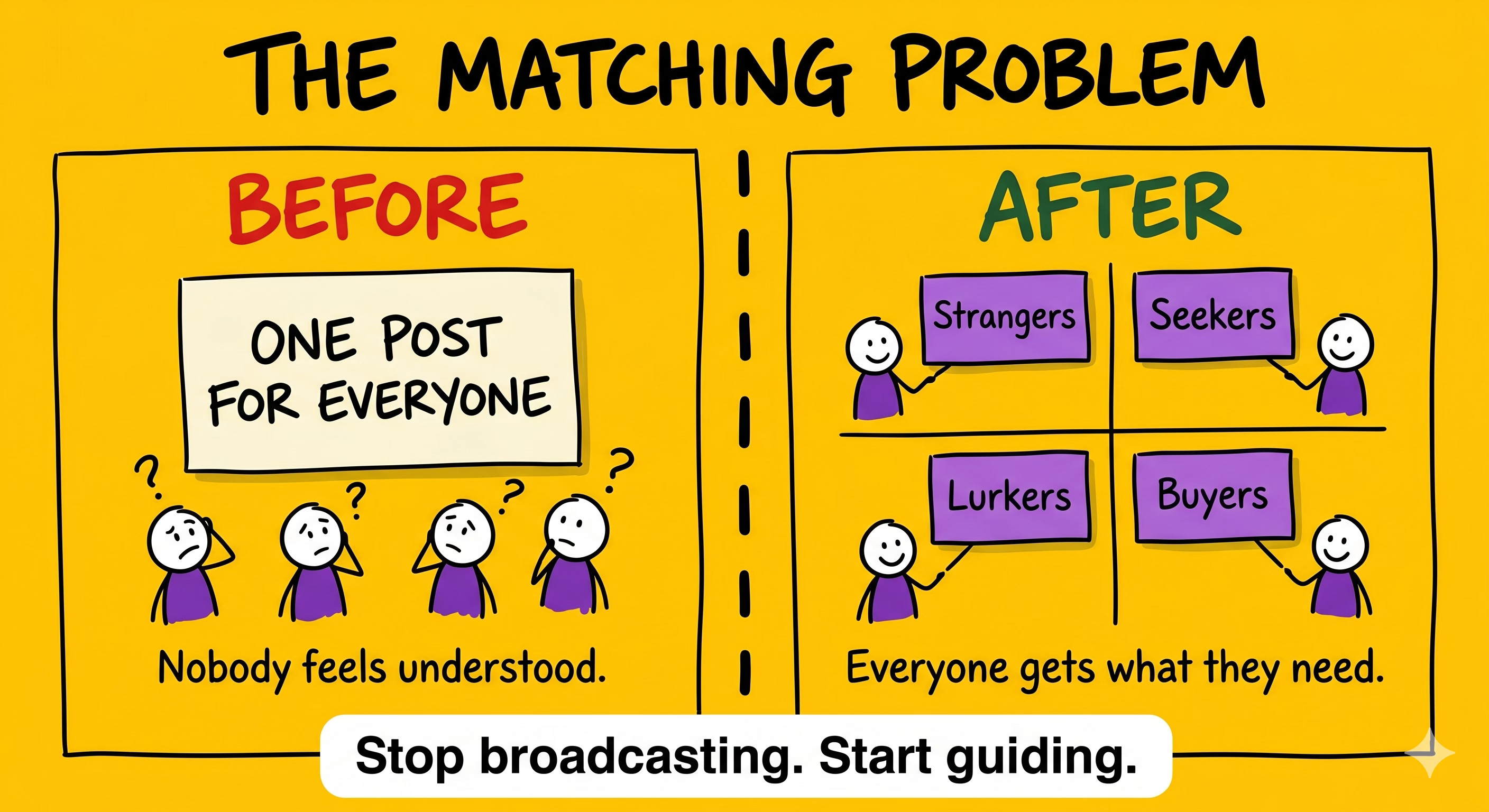
1.3 The Funnel Problem Is a Matching Problem
The real issue isn’t your writing. It’s the mismatch between what you publish and where your reader is in their journey.
Fix the match, and your funnel starts working on its own.
That’s exactly what the Reader Journey Matrix is designed to do.
2. The Reader Journey Matrix
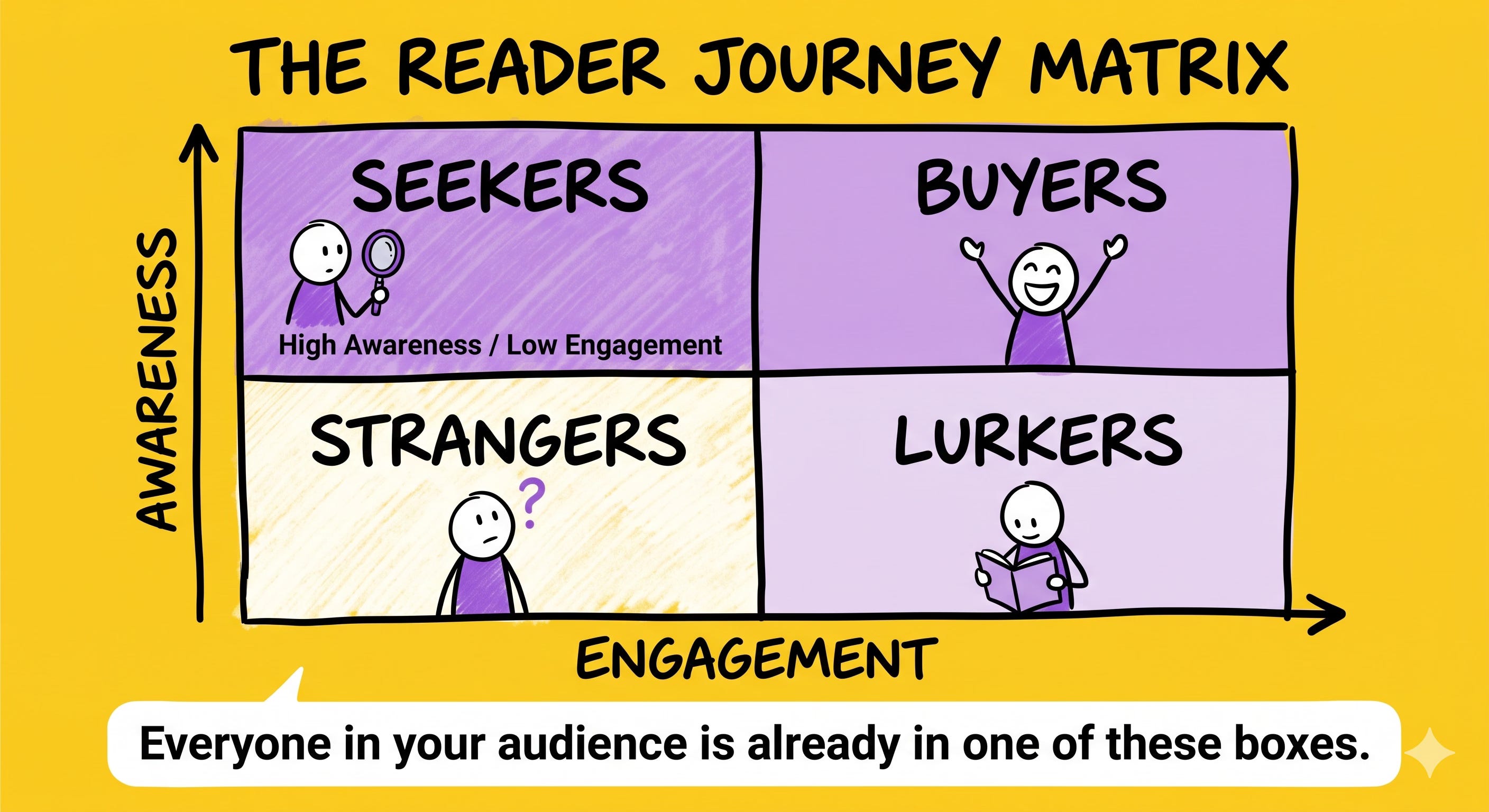
2.1 The Four Quadrants
Think of your audience on a simple grid.
On one axis: Awareness. How well does this person understand their own problem?
On the other axis: Engagement. How connected do they feel to you specifically?
This gives you four quadrants:
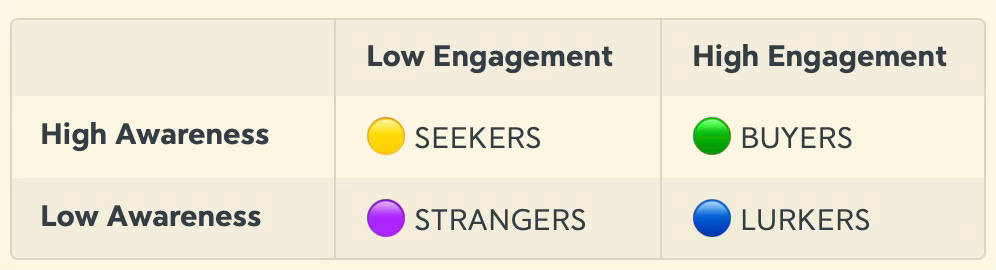
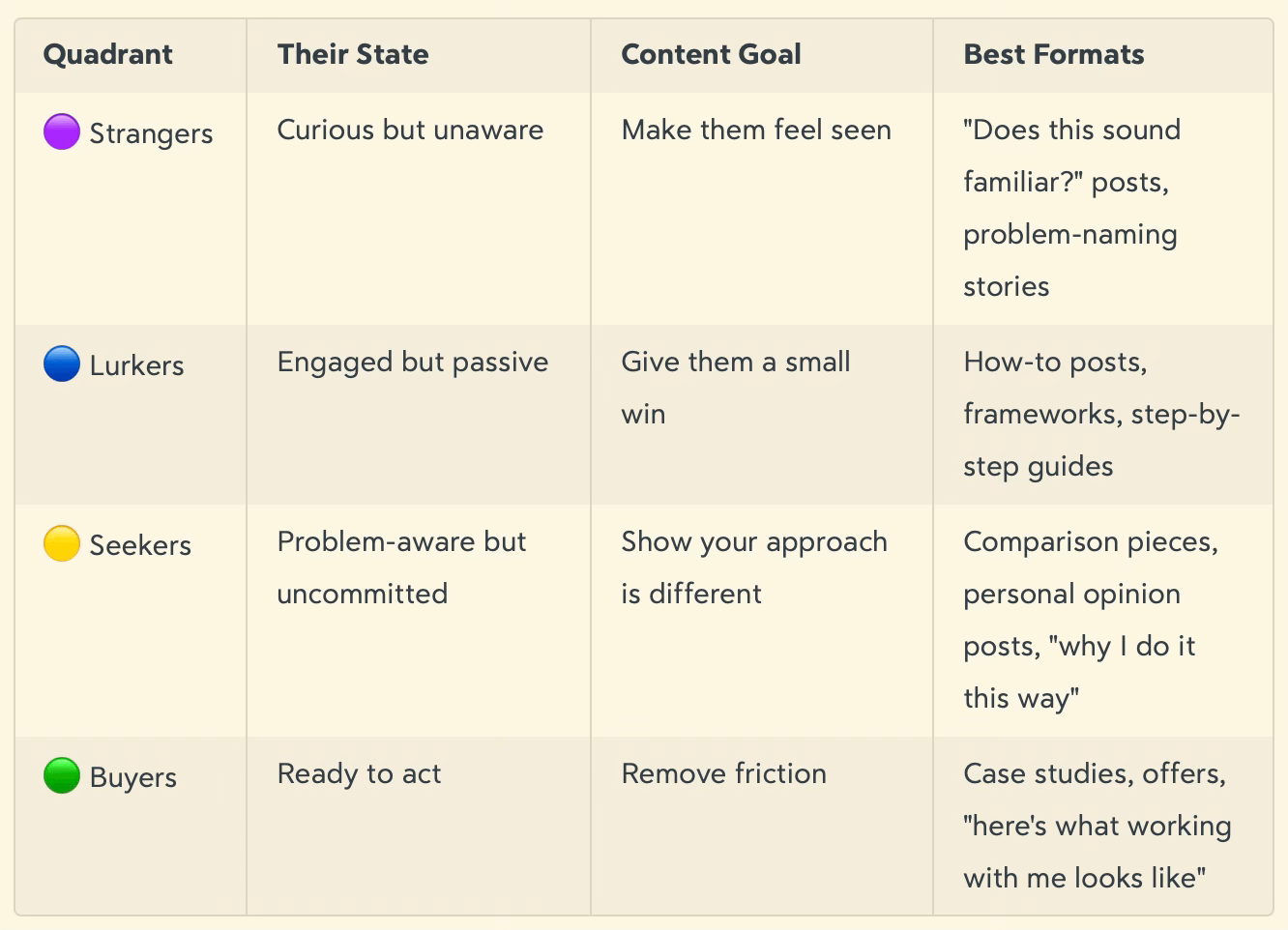
Strangers just found you. They don’t fully understand their problem yet. They’re in discovery mode. They clicked on a Note or saw a share. They subscribed but they’re not sure why yet.
Lurkers read your stuff regularly but don’t know what you sell. They open every email. They just don’t act. They like you but they’re missing the connection between your content and their problem.
Seekers know exactly what problem they have and are actively hunting for a solution. They just haven’t decided if you’re the right person to help them yet. They’re comparing options.
Buyers trust you, understand their problem, and are ready to act. They need one thing: a clear path to take the next step.
2.2 Where Most of Your Readers Actually Are
Here’s what most creators don’t want to hear: the majority of your list is Strangers and Lurkers.
They found you through a recommendation, a share, or a Notes post. They liked something. They subscribed.
Then you started sending them the same content you send everyone else.
That’s where the journey breaks.
I ran a simple audit of my last few newsletters(I mean my Kit Newsletter) . Eight of them were written for Seekers and Buyers. The two largest segments in my list at the time were Strangers and Lurkers. I was publishing past them completely.
The matrix gives you a map. Once you see it, you can’t unsee it.
3. What to Write for Each Quadrant
3.1 The Content Match Table
Different quadrants need fundamentally different content. Here’s the breakdown:
3.2 Real Creator Examples for Each Quadrant
Strangers content in the wild:
Justin Welsh grew his newsletter to 250,000+ subscribers and over $5 million in creator revenue. His most viral content isn’t about his offers. It’s posts that name the exact problem his audience can’t quite articulate. “The LinkedIn post that made me realize I was the problem” or “The silent career mistake nobody told me about.”
That content does one job: makes a Stranger feel seen.
Lurker content in the wild:
James Clear built Atomic Habits to 2 million email subscribers before the book launched. His newsletter was almost entirely free value. No selling. Just frameworks. He was turning Strangers into Lurkers and Lurkers into deeply engaged fans for years.
The selling came later and it worked because the trust was already there.
Seeker content in the wild:
Katelyn Bourgoin runs Customer Camp, a newsletter about buyer psychology. She writes almost exclusively for Seekers. Her content answers “why do people actually buy?” in specific, evidence-backed ways. She isn’t trying to bring awareness to the problem. She’s positioning her unique take as the answer Seekers should trust.
Her paid tier conversion rate is well above the Substack average of 5-10%.
Buyer content in the wild:
Sinem Günel’s paid upgrade flow is a master class. She uses case studies of specific clients (like Susan, the founder publication that buries “weekly articles” because the rest of the offer is so much more valuable). That specificity converts Buyers. Not generic promises.
Real proof of specific results
3.3 How I Apply This With Claude
I don’t write four different newsletters for four audiences. That’s not sustainable.
Instead, I use Claude before I write anything. I describe my content idea and ask which quadrant it naturally serves. Then I write one piece that serves one quadrant well.
The difference is intentionality. Before the matrix, I was writing instinctively. Now every piece has a job.
4. The Trigger Content That Moves People Forward
4.1 What Trigger Content Is
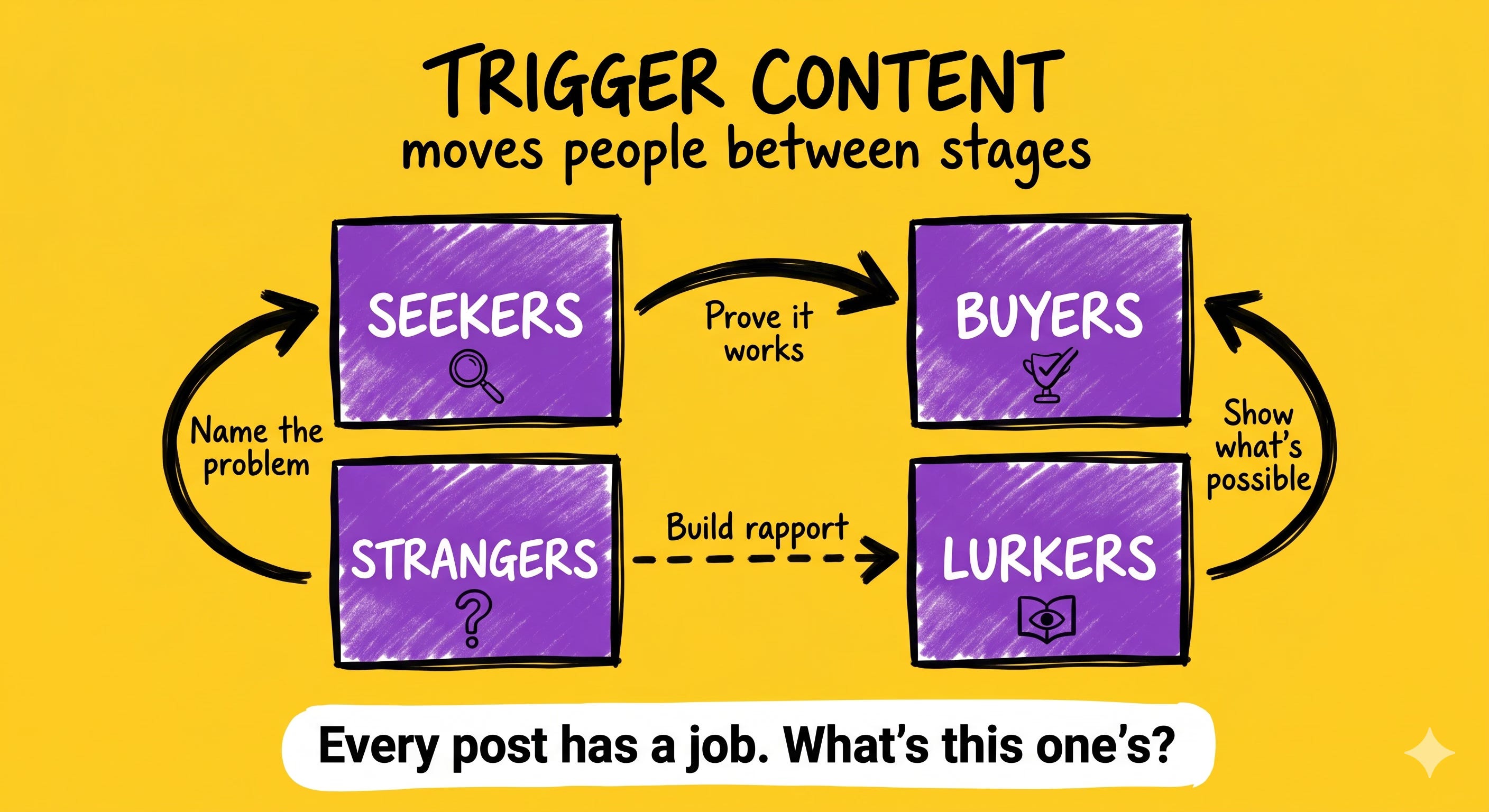
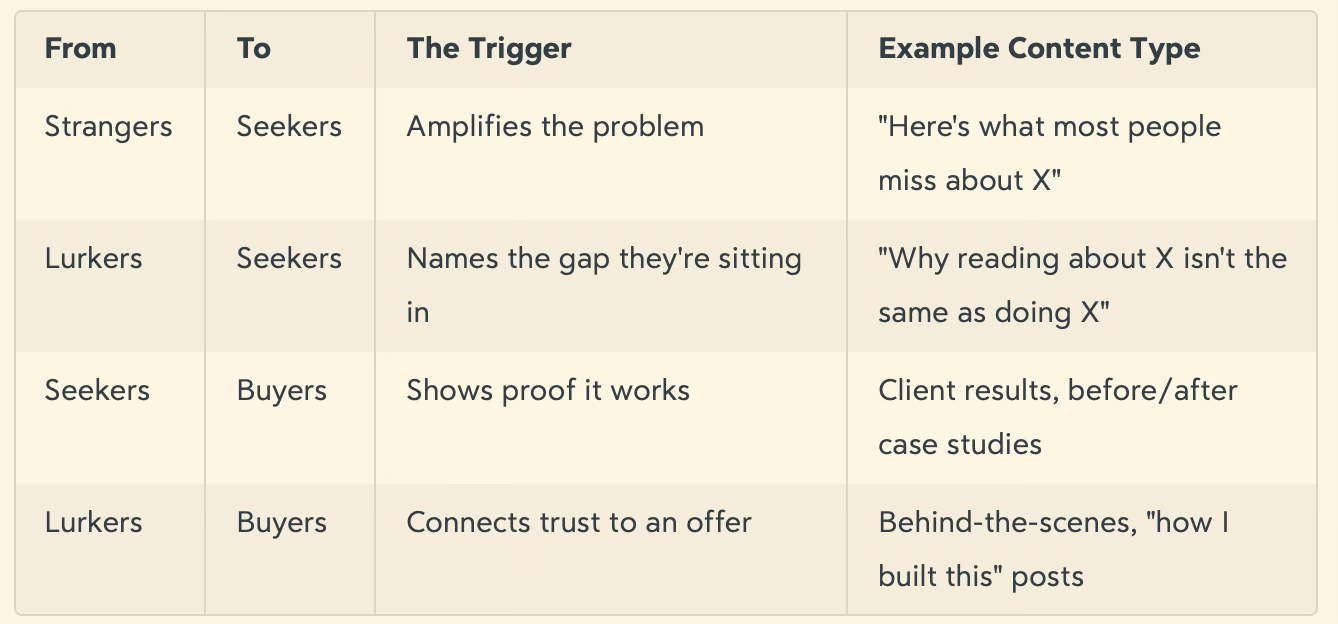
Some content exists purely to move readers from one quadrant to another.
I call this trigger content.
It’s not about educating. It’s about shifting perspective. It creates the moment where the reader thinks “wait, that’s me” or “I didn’t realize I needed this.”
That mental shift is what moves them forward in the matrix.
4.2 The Four Transition Moves
4.3 The Creator Who Does This Best
Dan Koe is the clearest example of trigger content done right.
He’s built The Koe Letter to over 160,000 subscribers and generates over $4 million a year. His content moves people through the matrix systematically.
His broad philosophical posts bring in Strangers. His “how to think differently about work” essays turn Strangers into Seekers. His breakdowns of his own business model move Seekers toward trust. His offers land because by the time a reader sees them, they’ve already been moved through the matrix three or four times.
He doesn’t announce any of this. But it’s clearly intentional.
4.4 The Full Funnel Flow
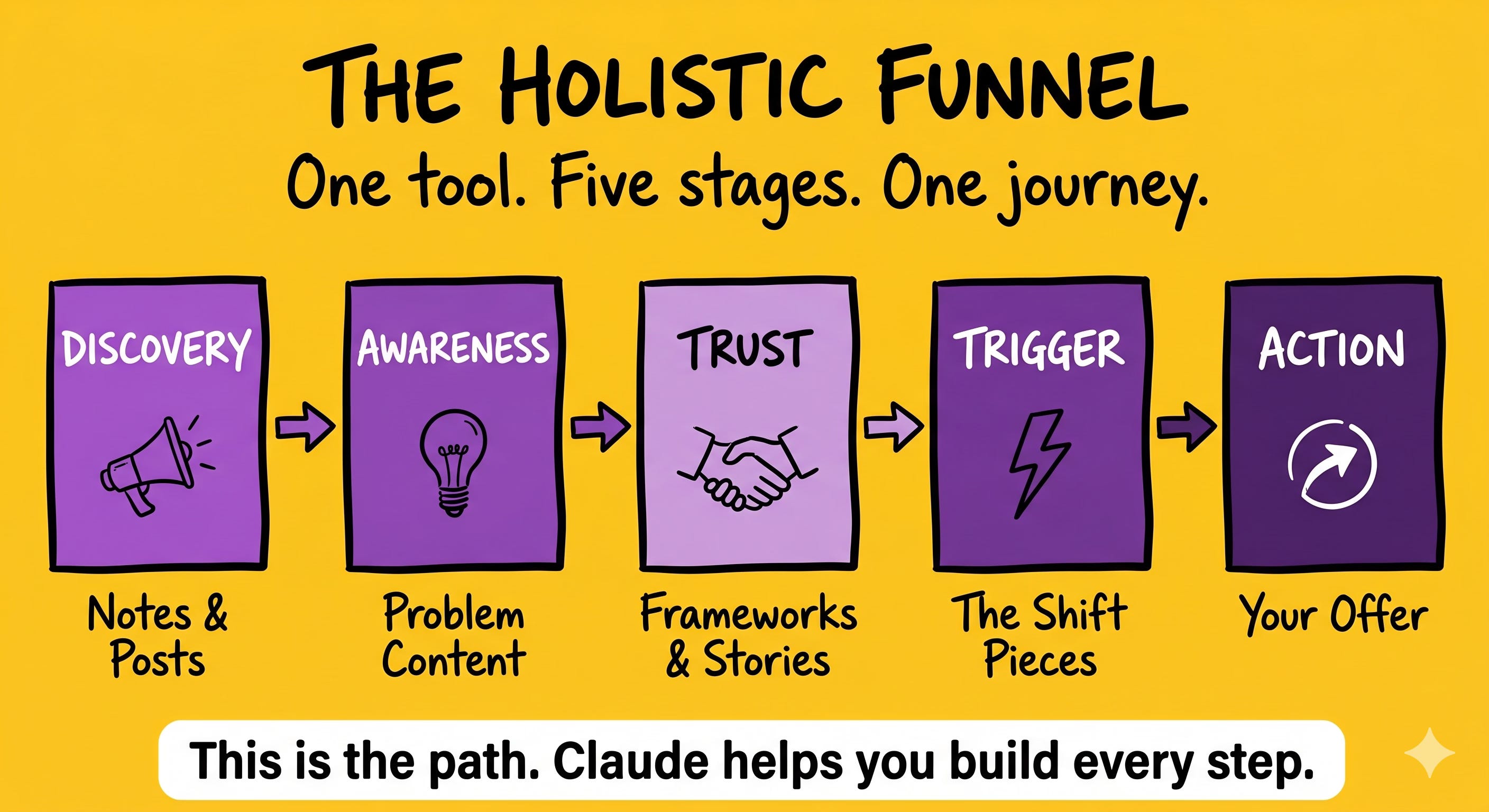
Here’s how it all connects:
Discovery content brings in Strangers. Notes, shareable posts, guest features.
Problem-aware content turns Strangers into Seekers. “Here’s what’s actually going on” pieces.
Trust-building content deepens Seeker connection and turns them into Lurkers. Frameworks and personal stories.
Trigger content moves Lurkers and Seekers toward action. Proof-of-concept and behind-the-scenes posts.
Offer content closes the loop. The Buyer takes action.
Claude helps me build every layer. I describe the stage I’m writing for. I write the piece. The prompts stay out of the final draft but the clarity they create stays in the writing.
5. Your One Action to Start Today
You don’t need to rebuild your entire newsletter today.
Pick your last five published pieces. Drop them into the matrix. Which quadrant were you writing for? Which quadrants did you completely skip?
That gap is your answer.
Most beginners publish almost entirely for Seekers and Buyers. They assume everyone on their list already understands the problem. Most people don’t. And the ones who do haven’t been given a reason to trust you specifically yet.
Start with Strangers or Lurkers. Write one piece with a single, clear job for one of those quadrants.
The matrix works because it treats your audience like real people at different stages of a real journey. Not a faceless list. Not “subscribers.” People going somewhere, and you’re helping them get there.
That’s what a funnel should feel like. Not a trap. A path.
One last thing.
The framework is simple. Once you see your audience through this lens, you can’t unsee it.
One quadrant. One piece of content. One clear purpose.
That’s where every good funnel begins.